
Sunscreen under makeup fails for a boring reason. It is not the sunscreen and it is not your foundation. It is the nine seconds in between. You smooth the sunscreen on, you reach for the makeup right away, and the two never settle into each other. The makeup slides. It gathers in small rolls along the jaw. By ten in the morning it has crept into the lines around your eyes and you look tired in a way you are not. I did this for years and blamed the foundation. Then Neutrogena Ultra Sheer Sunscreen Serum SPF 60 landed on my bathroom shelf in April 2025, and I found out the order had been the problem the whole time.
I spent 22 years behind a department-store cosmetics counter in Charlotte, North Carolina, nine of them as the counter manager, and I left retail in 2022. So I have watched a few thousand women do this in bad lighting with a mirror set at chin height, and I did it myself. Now I am 58, my skin is dry and a little sensitive, and the close-up photographs from my daughter's birthday dinner in April 2025 showed me makeup that looked cakey and settled into every line. That is what got my attention. Back in March 2025 my dermatologist, Dr. Okafor, had told me to wear sunscreen every single day. I bought the Neutrogena serum that April and have used it every morning since. What follows is the order I do things in, and why each step earns its place.
The step the whole routine leans on goes on before the makeup
Neutrogena Ultra Sheer Sunscreen Serum SPF 60 is the last skincare step in the morning, before the base. Broad spectrum SPF 60, fragrance free, non-comedogenic, matte finish, water resistant for up to 80 minutes per the listing.
Amazon Check Today's Price on Amazon →Step 1: Wash, Serum, Then Sunscreen, In That Order
My sink routine starts about 7:00 and takes four minutes, and the order is the whole point. I wash with a plain gentle cleanser, nothing that foams like dish soap, nothing with a scent I can detect. Then a few drops of La Roche-Posay 12% Vitamin C Serum, which has been my morning serum since June 2025. I press it in, put my hair up, take my vitamins, and by the time I turn back around about a minute has gone by. Then the Neutrogena sunscreen serum goes on. Then, and only then, does makeup enter the room.
That minute between the serum and the sunscreen is not fussiness. If the serum is still wet, the sunscreen slides over it and spreads thinner than the amount I measured out. I wasted a good part of the first bottle learning that. The same thing applies to anyone using a heavier morning moisturizer: give it a minute to settle, then go in with the sunscreen, rather than layering everything into one wet pile and hoping.
And if your skin is very dry, mine certainly is in January, the sunscreen is not a replacement for moisturizer. The listing describes it as hydrating and I find that it is, but on cold mornings I still put a light moisturizer underneath. Patch test anything new on your jaw for three days first, sunscreen included, because a reaction at seven in the morning is a poor way to start a Tuesday.
Step 2: Use More Sunscreen Than Feels Reasonable
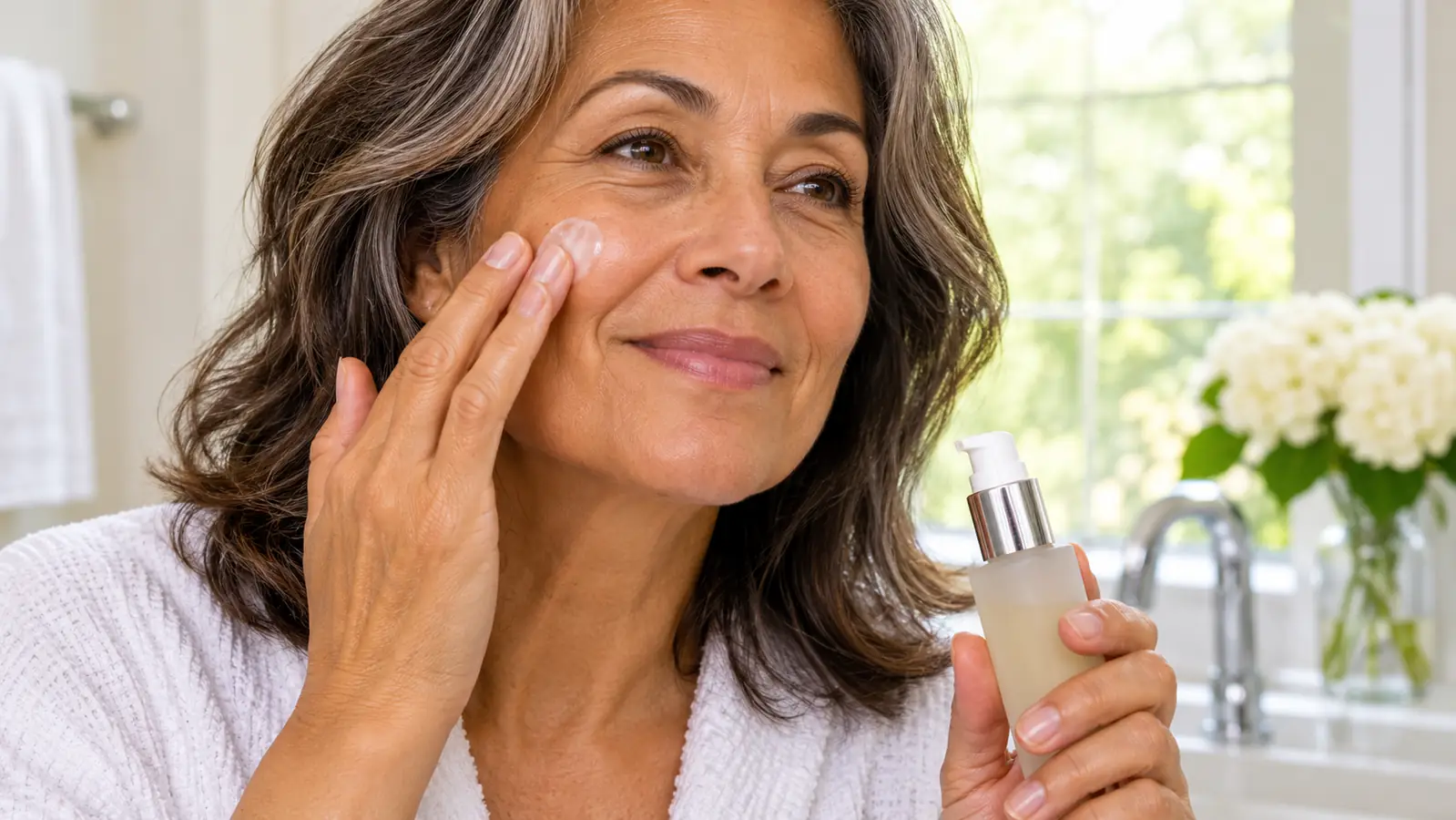
Most of us use far less sunscreen than the amount behind the SPF number assumes. I was guilty of it for years. I used a thin film, the way you would use a night serum, and then wondered why my cheekbones were the first place to show a spot. Now I use a generous amount, more than feels quite reasonable, and I do not stop at my face. Ears. Neck. The backs of my hands, which nobody thinks about and everybody's grandmother should have.
The Neutrogena listing says broad spectrum SPF 60, fragrance free, non-comedogenic, matte finish, and water resistant for up to 80 minutes, and after 19 months of daily use I can speak to a couple of those. Fragrance free has held up for me, and my cheeks flush easily with scented products, so I would know. The matte finish is the reason I can wear makeup over it at all. It dries down instead of sitting there wet and shiny, which is more than I could say for the tinted moisturizer I wore before.
One thing I want to be plain about, because I see it done constantly. My CC+ Cream has SPF 50 in it and I do not count it toward anything. A tinted product goes on in a thin layer, one pump for a whole face, and that is not how sunscreen protection is measured by anybody. The sunscreen serum goes on first every single time, and the makeup is makeup.
Step 3: Give It Three Full Minutes Before the Sponge
For the first few weeks I could not work out why my makeup was pilling. Little flakes along the jaw and at the hairline, worse on humid days, better in February. Then the obvious answer arrived and I felt foolish. I was putting the CC+ Cream on before the sunscreen had dried down.
Three minutes is what works in my bathroom, in Charlotte humidity, in July and in January. I do not own a timer. I put the sunscreen on, I brush my teeth, I make the bed badly, I come back. If you are running late, do not shorten the wait. Shorten something else. These three minutes are what keeps the rest of the routine from falling apart, and they cost you nothing but standing around.
What the wait buys you is a surface the makeup can sit on. Rushed, the sunscreen is still slightly tacky and the sponge drags it into ridges. Left alone, it dries down to that matte finish the listing mentions, and the makeup goes on top of it instead of into it. This is the single change that stopped my makeup settling into the lines around my eyes, and I noticed it inside a week.
If your skin is oilier than mine, the same principle holds with a lighter hand. The wait is about the surface being dry to the touch, not about the clock on the wall. I check with the back of one finger near my jaw, and if it comes away with a faint sheen of product I give it another minute. That small check has saved me more mornings than any product I have ever bought.
My makeup stopped settling into the lines around my eyes. The only thing I changed was giving the sunscreen three full minutes before the sponge.
Step 4: Press the Makeup In, Do Not Buff It Around
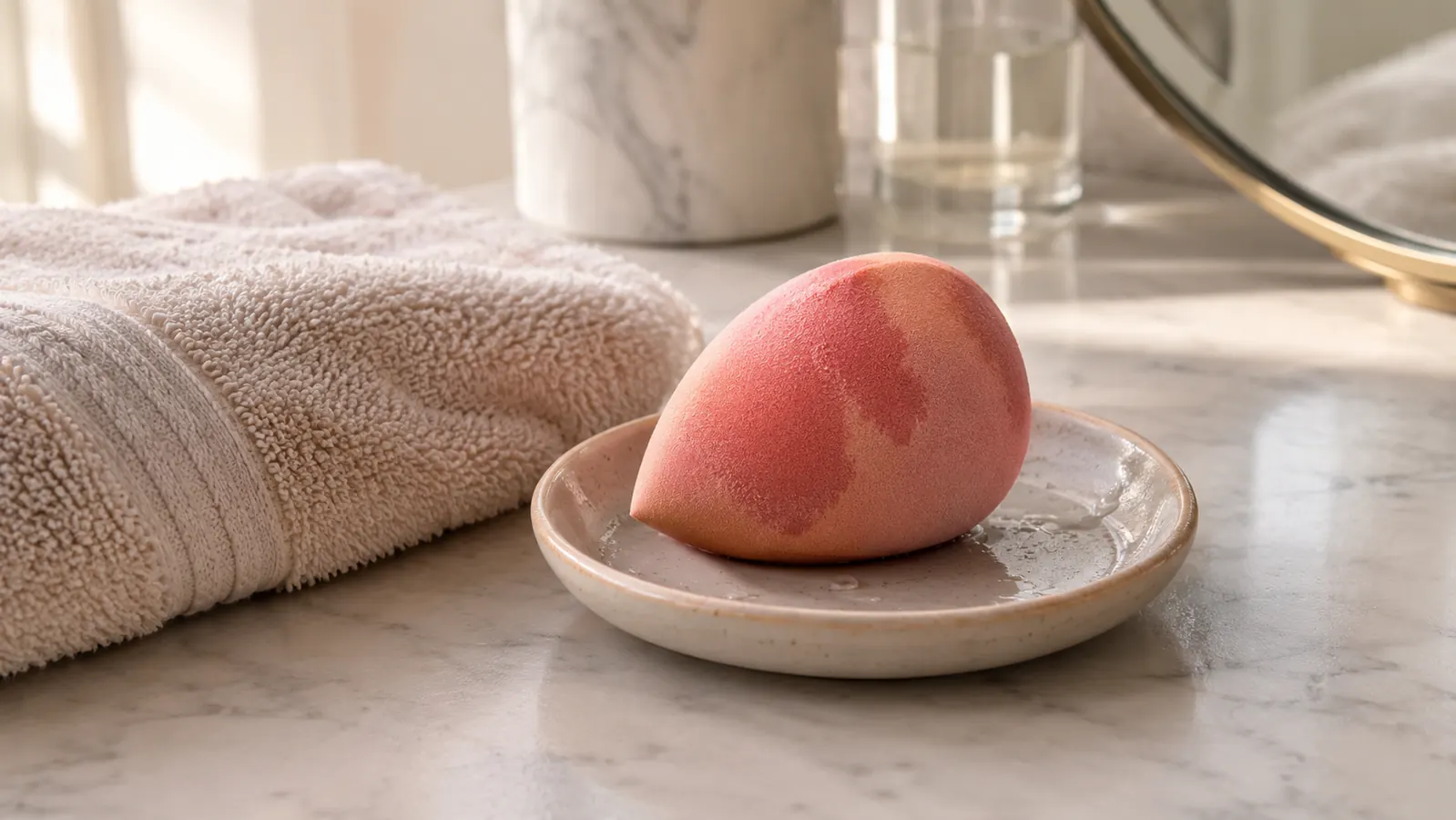
One pump of IT Cosmetics CC+ Cream in shade Medium, pressed in with a damp makeup sponge. Pressed, not buffed. Buffing means friction, and friction is what moves the sunscreen around underneath and pushes it off the places you carefully covered. I tap, working from the middle of my face outward, and I let the sponge do the work instead of my arm.
Under the eyes I use whatever is left on the sponge and nothing more. That skin is thin and dry on me, and a second layer there is how you get the crepey look in every photograph from a family dinner. A little extra tapped into the outer corner is plenty. If you use a different base, the principle travels: thin layers, pressed in, no scrubbing at the finish.
Powder only where I actually shine, which for me is the center of the forehead and the sides of the nose. Powder everywhere is what makes a face look dusty in daylight. If your skin is drier than mine you may not need any.
Step 5: Handle the Edges, Then Plan for the Afternoon
The edges are where a sunscreen-and-makeup routine shows its seams. I blend the base down past my jaw so there is no line, and then I go back over my ears and the back of my neck with sunscreen after the makeup is finished, not before, because otherwise the sponge wipes it straight off. Backs of the hands last, always, and I keep a spare in my bag for that reason alone.
Reapplying over a full face is the weakest part of this routine and I will not pretend otherwise. On a workday indoors I do not reapply in the afternoon. On a day outside I do, and I accept that my makeup looks worse by four o'clock. At Myrtle Beach with Raymond in July 2026 I reapplied about every two hours and wore a wide brim hat, and the sun spots on my cheekbones were still exactly where they were when I got home.
The practical version, for the days you bother: blot the shine with a tissue, pat a small amount of the sunscreen serum over the top with your fingertips, then touch up only the places that truly need it. It is not a fresh face at three in the afternoon. It is better than nothing, which is the honest choice you are making, and I would rather make it than skip it.
What Else Helps
Patch test first. Any new sunscreen, any new serum, three days on the jaw before it goes anywhere near your eyes. I have flushed my way through enough products to know that the testing is dull and the reaction is not. Introduce one new thing at a time so you know what caused it if something goes wrong.
Retinol at night, sunscreen in the morning, never the two within twelve hours of each other. I started CeraVe Resurfacing Retinol Serum in January 2026 at two nights a week, and the flaking around my nose and chin in the second week told me plainly not to rush. If you are using retinol, sunscreen in the morning matters more, not less. Go slowly and let your skin set the pace, and stop if it stays angry.
A hat does more on a bright day than any product I own. I keep a wide brim one hanging by the back door so I do not have to be sensible, only reach for it. The vitamin C serum lives in the closed medicine cabinet because light is not kind to it. The makeup sponge gets washed every few days, which nobody enjoys and everybody should do.
Keep the bottle where you will actually see it. Mine sits on the small tray by the sink next to the cleanser, because a sunscreen in a drawer is a sunscreen I forget about by seven fifteen. The wide shelf in the main bathroom holds the rest of the five products I use, and Raymond has been told more than once that none of them are his.
And please see a dermatologist about any spot that changes, itches, bleeds, or is new to you. I go once a year, in March. Dr. Okafor told me in March 2025 to wear sunscreen every single day and to start a retinol slowly if I wanted to. At my March 2026 check she said my skin looked healthy and to keep wearing sunscreen, and that was the whole conversation. No product did that. Months of boring mornings did, and I cannot prove which one did what.
None of this is complicated. It is a gentle wash, a serum, a generous amount of sunscreen, three minutes of patience, and a sponge. The reason it works is that I will actually do it at 7:00 on a Wednesday, which is the only test any routine has to pass.
If you change one thing about your morning, change the order
Sunscreen first, makeup second, three minutes in between. Neutrogena Ultra Sheer Sunscreen Serum SPF 60 has been the last skincare step in this routine since April 2025.
Amazon Check Today's Price on Amazon →