

The bottle sat on my shelf for eleven days before I opened it. I bought CeraVe Resurfacing Retinol Serum in January 2026 and set it down next to the night cream, and then I found reasons not to start. I spent twenty-two years behind a department store cosmetics counter in Charlotte, the last nine of them running it, so I have watched up close what a retinoid does to a face that is not ready for it. Mine was dry, quick to flush across the cheeks, fifty-eight years old, with fine lines around the eyes and across the forehead and a few sun spots along the cheekbones from too many beach weekends.
So I did the thing I used to tell customers to do and rarely saw anyone actually do. Two nights a week. Nothing else new. A pea-size amount and no more. That was ten months ago. The bottle is two-thirds gone and I have an opinion about it, though it is a quiet opinion, the kind you form from looking at your own face under the same bathroom light night after night for most of a year.
The Quick Verdict
Ten months of careful use left my skin looking softer and more even to me, and left my makeup sitting where I put it around the eyes. It cost me about two weeks of flaking to get there, and nothing about it ever felt fast.
Amazon Check Today's Price →The retinol that stayed on my shelf for ten months
Encapsulated retinol with niacinamide, licorice root extract and three essential ceramides. Fragrance free, non-comedogenic, 1 oz. I started it in January 2026, twice a week, and I have never wanted to swap it out for something stronger.
Amazon Check Today's Price on Amazon →How I've Used It
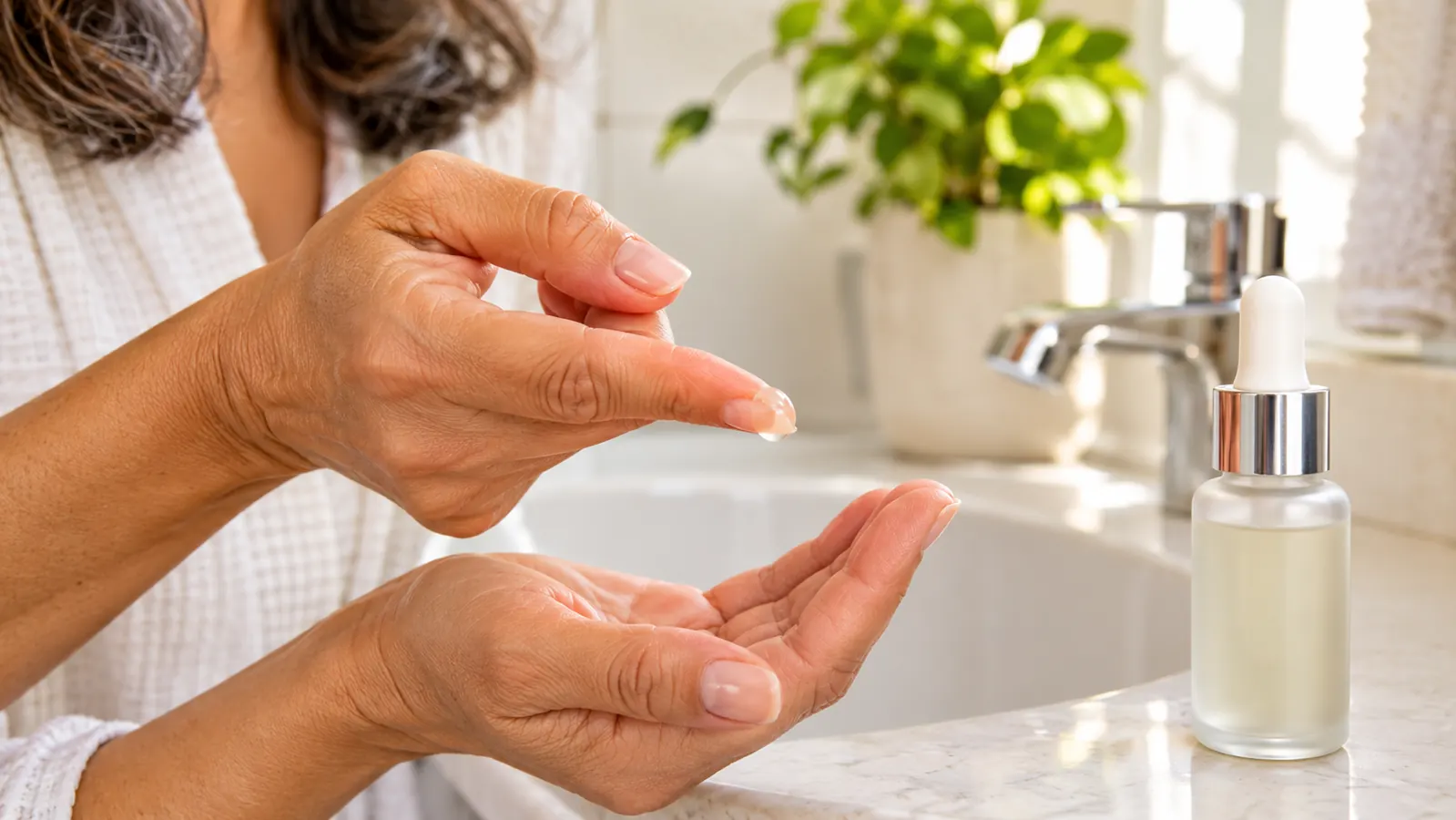
The CeraVe listing gives short instructions, and I followed them more literally than most people do. A pea-size amount, on dry skin, at night. I keep it away from the corners of my eyes and the creases beside my nose, because those are the places that sting first when something is too much for my face. Then I wait about ten minutes, which is roughly the time it takes to hang up a towel and brush my teeth, and I put the CeraVe Night Cream over the top of it.
The schedule was the part I got right. January 2026, Monday and Thursday, and only those two nights. In the second week my nose and chin started flaking and my face felt tight after washing, so I stayed at two nights a week through the whole of February instead of pushing on. In March I moved to every other night, and that is where I have stayed. Not nightly. I have never used it nightly, and I do not intend to.
I keep the bottle at the back of the shelf, behind the night cream, so that on a Monday or a Thursday I have to move something to reach it. That small obstacle is deliberate. On the nights in between I do not want to be handling the bottle at all, and the extra second of reaching for it has stopped me more than once from squeezing out a third night in a row just because my skin felt rough and I wanted to fix it quickly. On the nights I do use it, I set the kitchen timer for ten minutes and leave it on the counter, because I am the sort of woman who will otherwise convince herself that three minutes is close enough to ten.
That patience is not a personality trait of mine. It is what twenty-two years of watching women buy a strong product, use it every single night because more seemed better, and come back two weeks later with a red, peeling face taught me. Retinol is one of the few things at a cosmetics counter where doing less genuinely seems to work better, at least on skin like mine.
What the Listing Says, and What It Leaves to You
The CeraVe listing describes an encapsulated retinol serum with niacinamide, licorice root extract and three essential ceramides, listed as 1, 3 and 6-II. It is fragrance free and non-comedogenic, and the bottle is 1 oz, or 30 ml. Those ingredients are the reason I picked it over a plain retinol in the first place. Niacinamide and ceramides are the two things I look for in anything that goes on dry, easily flushed skin, and I was willing to start here because the retinol in it is encapsulated, which sounded like a gentler first step than the bare retinol serums I had been reading about.
Where the listing is less help is in the day to day. It does not tell you how long to wait before the next layer, how often to start, or what your own face will do in week two. It also uses the words pore minimizer and mentions acne marks. I did not buy it for either of those and I cannot speak to them from my own face. If those are your reasons for looking at this serum, the listing and a dermatologist are the places to read, not my bathroom mirror.
What I would add is the part no label can print on a bottle. Patch test it, on the jaw or behind the ear, for a few days before it goes anywhere near your whole face. Introduce it slowly, slower than you want to. Wear sunscreen every single morning, all year, whether or not the sun is out. And see a dermatologist about any spot that changes, or about anything on your skin that worries you at all. I am not a dermatologist and I am not an esthetician, and nothing here is medical advice. I am a woman with a mirror and a shelf in the bathroom.
The First Two Weeks Were Not Pretty
Week two is where it caught up with me. Around the sides of my nose and along the chin, the skin flaked in small patches, and after washing my face felt tight in a way it had not felt since I was over-cleansing in my twenties. It was not a burn and it was not a rash. It was the adjustment retinol asks for, and it still made me look tired for the better part of a week, which is not the look I was going for when I started.
For three nights I tried to solve it the wrong way. I put the night cream on first and the serum on top of it, thinking a buffer would soften the whole thing. It did not. My chin flaked exactly as before, and I had wasted the ten minutes of waiting, because now the retinol sat on top of a layer of cream and I had no idea how much of it was reaching my skin at all. I went back to the order the listing gives, serum first and cream after, and I stopped trying to be clever about it.
What I did about it was almost nothing. I stayed at two nights a week. I put the night cream on a little more generously on the flaking nights, and I did not scrub, exfoliate or add a second treatment to fix it. I did not stop, either, which I mention because stopping is the other reasonable choice and I would not argue with anyone who made it. If your face is angrier than mine was, stop and ask someone qualified.
By the end of February the flaking had settled and my skin felt like itself again. That is why March was the month I moved to every other night and not a moment sooner. If you take one thing from this section, take the timing. The flaking was not proof the product was working hard on my behalf. It was a sign I was at the edge of what my face would take, and I stayed there until it stopped being the edge.
What Changed, and What I Cannot Prove
Ten months in, the honest answer is that my skin looks more even to me. Not lighter, not younger, more even. The dullness I was unhappy about in the photographs from Simone's birthday dinner in April 2025 is not something I see in the mirror now, and while I would love to hand the credit to one bottle, five products went onto that shelf between April 2025 and January 2026.
The change I trust most is a small one and it is about makeup. My foundation used to settle into the lines around my eyes within an hour, and it does not anymore. It sits where I put it. That is the kind of thing you notice at two in the afternoon in a car mirror, not in a photograph, and it is the reason I kept going through the flaking in February instead of putting the bottle back on the shelf.
There was a Tuesday in June when I caught myself in the car mirror at a red light on the way to the grocery and did not immediately want to look away. That sounds like a small thing to write down. It is not a small thing at fifty-eight, and I noticed it weeks before I noticed anything in a photograph, which is why I trust it more than I trust the photographs. Raymond, who has never used a single product on that shelf, said I looked rested. He says that roughly twice a year, so I did not read too much into it.
The lines themselves look softer to me in photographs. Softer, not gone, and they are still there when I lean into the mirror. The sun spots on my cheekbones look a little lighter to me than they did a year ago, and they are also still there. I want to be careful here, because this is exactly the point where cosmetics writing usually stops being honest. Nothing on my face has disappeared.
At my yearly skin check in March 2026, Dr. Okafor said my skin looked healthy and to keep wearing sunscreen. That is the whole of it. She did not hand me a grade and I did not ask her to rank my serums. I cannot prove which of the five products did what, and anyone who tells you they can separate the effects of a vitamin C, a retinol and a night cream used together is guessing, however confident they sound.
The change I trust most is not in a photograph. My makeup sits where I put it at two in the afternoon, and it has not done that in years.
How It Sits With Everything Else on My Shelf
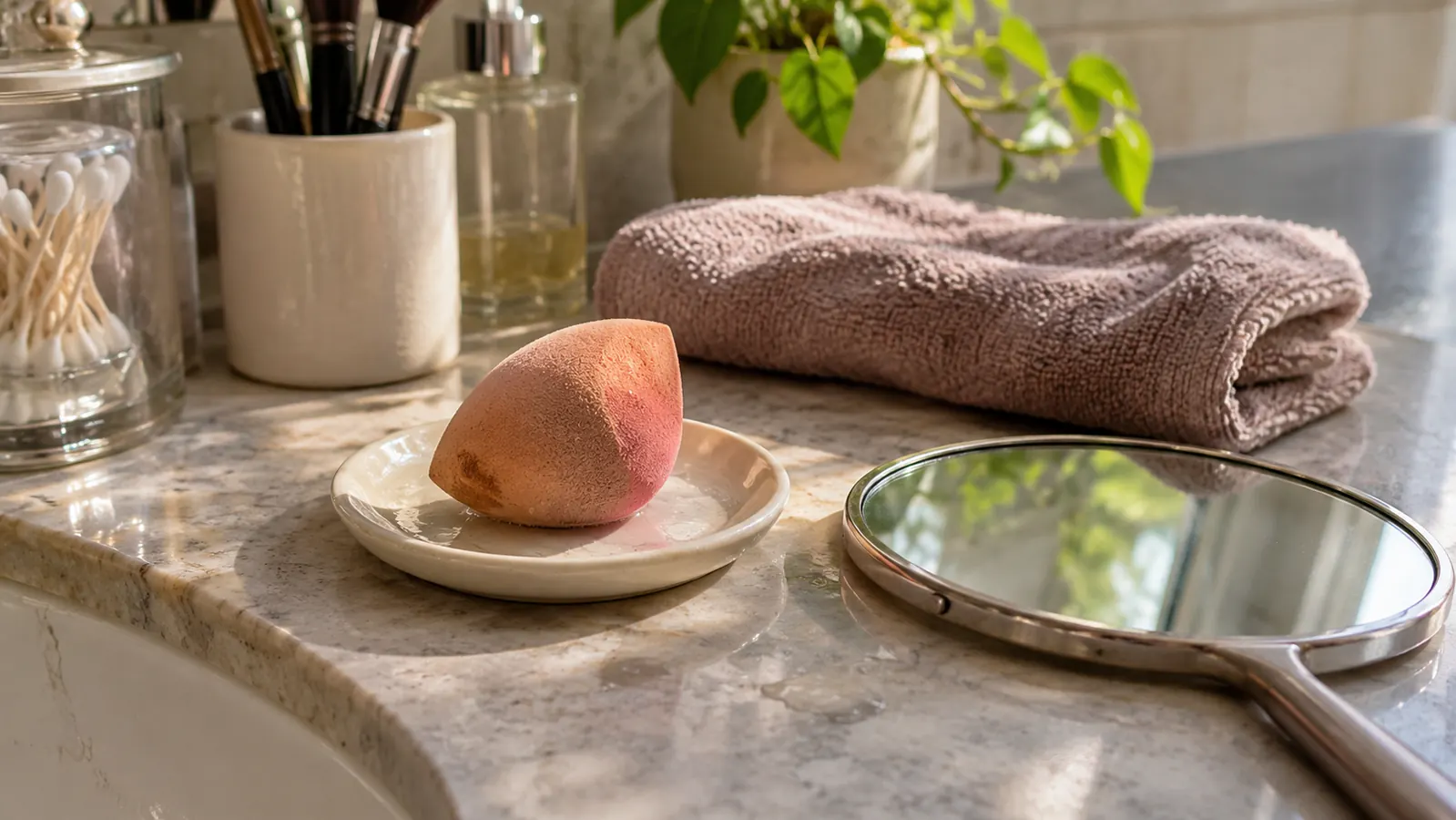
Mornings, about seven, belong to the vitamin C and the sunscreen. I wash with a plain gentle cleanser, press in a few drops of the La Roche-Posay vitamin C serum, wait a minute, then the Neutrogena sunscreen serum as my last skincare step, then the IT Cosmetics CC+ Cream with a damp sponge on the days I leave the house. Evenings, about nine thirty, are the retinol and the night cream, or the night cream alone on the nights in between.
The two actives never meet. Vitamin C in the morning, retinol at night, never the two together. That is not a rule I invented, it is simply how I was taught to sequence them and how I have done it since January. If you are building a routine from nothing, the order of the middle steps matters far less than the sunscreen does, and the sunscreen matters more than everything else on the shelf put together.
The retinol is also the one product on that shelf I do not adjust with the season. With the night cream I use more in January than in July, and with the sunscreen I use more in July than in January, but the retinol stays at a pea-size amount on the same every-other-night rhythm all year. That took discipline in the dry weeks of February, when every instinct said to skip it, and just as much discipline in June, when my skin felt good and I was tempted to add a night because surely a little more would be a little better.
All five live on one wide shelf in the main bathroom, except the vitamin C, which stays in the closed medicine cabinet because light is not kind to it. Raymond finds the whole arrangement funny and has never once touched any of it. The retinol is a 1 oz bottle and I have had it ten months, which tells you how far a pea-size amount actually goes. I have never travelled with it and it has never sat in a hot car. That is the entire care routine for the bottle, and it has held up perfectly well.
What I Liked
- Fragrance free and non-comedogenic, which matters on cheeks that flush at the first harsh thing you put on them
- A pea-size amount is genuinely enough, so a 1 oz bottle lasted me ten months and is still going
- Encapsulated retinol with niacinamide, licorice root extract and three essential ceramides, a calmer first step than a bare retinol serum
- Sits comfortably under my night cream after about ten minutes, with no pilling
- Never stung the way the vitamin C serum did in my first week
Where It Falls Short
- Week two brought real flaking and tightness around my nose and chin
- I saw nothing I could name for the first several weeks
- It is a slow product and it will not satisfy anyone who wants a visible change by a particular date
- The listing talks about pores and acne marks, and I cannot speak to either from my own face
- You have to be disciplined about sunscreen every single morning or you are working against yourself
Who This Is For
This is for someone with dry or easily flushed skin who wants to start a retinol and is willing to spend three months finding out whether it suits her. It suits a person who already wears sunscreen every morning, because without that you are working against yourself. It suits someone who would rather see a small, real change at ten months than a dramatic one at three weeks that arrives with a red, peeling face and a week of hiding under concealer.
Who Should Skip It
Skip it if you want a fast result, if you have never patch tested anything and do not intend to start, or if you are already using another retinoid and are thinking of layering this on top of it. Skip it if you are pregnant or nursing, or if you are being treated for a skin condition, without asking your doctor first. And skip my whole article if what you actually want is a diagnosis. That is a dermatologist's job, and it was never a counter manager's.
If you are going to be patient, be patient with this one
Encapsulated retinol, niacinamide, licorice root extract and three essential ceramides. Fragrance free, non-comedogenic, 1 oz. Ten months on my shelf, two nights a week to every other night, and it has earned its place.
Amazon Check Today's Price on Amazon →